
Craftsmanship
Every jacket in this collection starts long before it reaches a hanger. It starts in Sialkot, Pakistan, a region with a leatherworking history that goes back generations and remains one of the world's most respected sources for genuine hide. That's not a marketing detail — it's the actual starting point for every hide that becomes a Sheepskin Leathers jacket.
Where the Leather Comes From
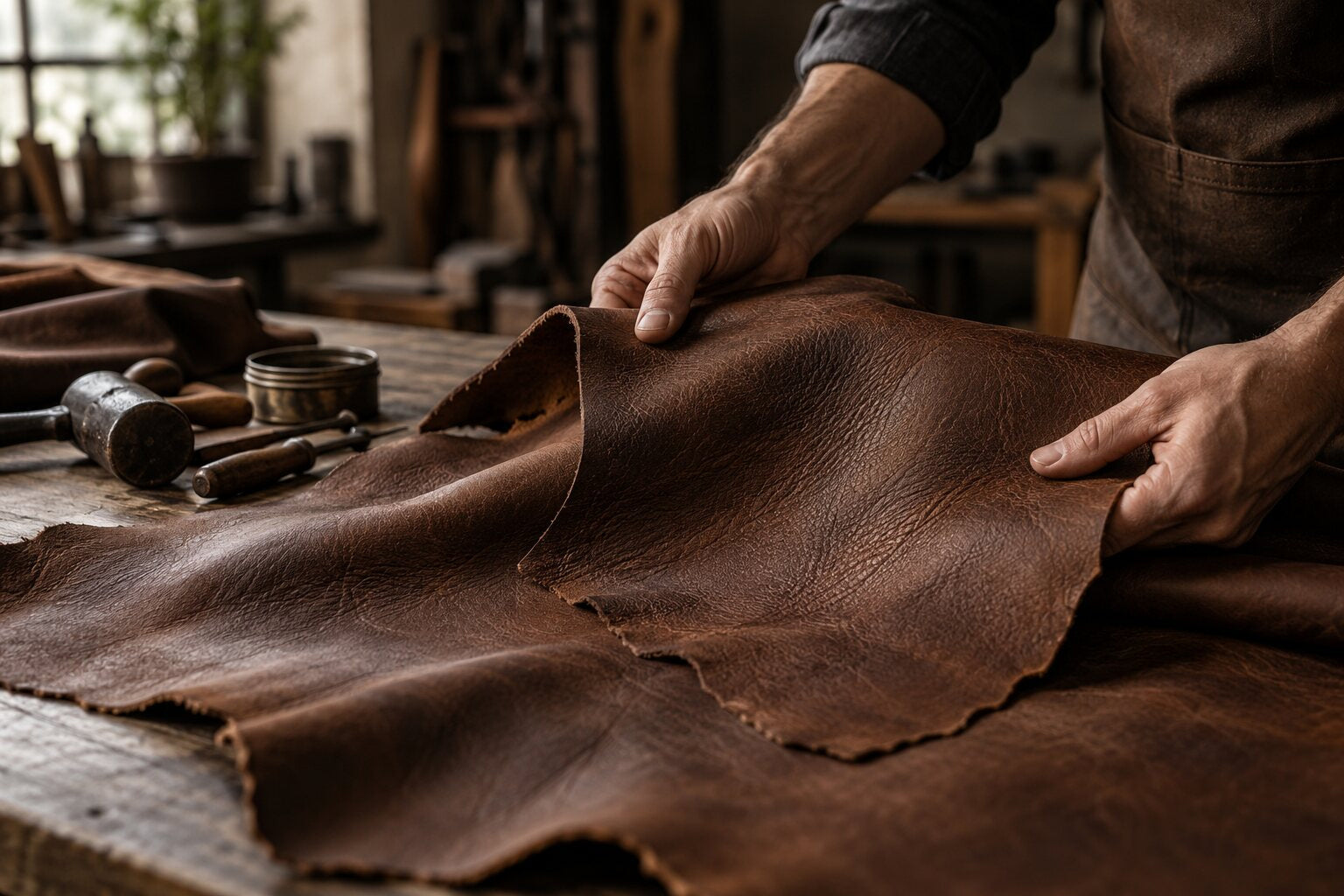
The hides used across our sheepskin jackets and shearling jackets are sourced from tanneries based in Sialkot, an area long established for leather production and export. Depending on the jacket, hides go through either chrome tanning or vegetable tanning — chrome tanning for a softer, more supple finish that takes color evenly, vegetable tanning where a firmer, more structured hand is needed. Which process is used isn't arbitrary; it's matched to what the specific jacket style calls for.
A documented Sialkot tannery example: Customers who want to explore the region's leather heritage can visit the official Sheikh of Sialkot tanning unit. Established in 1981, the Sialkot-based operation describes decades of experience producing garment, shoe-upper, lining and bag leathers. It is included here as an independent example of the specialist tannery knowledge found across the region.
Natural material note: Genuine hide can carry small variations in grain and tone. These natural characteristics help make each finished leather jacket slightly individual rather than mechanically identical.
How Leather Is Prepared in a Tannery
Exact recipes vary according to the type of hide and the finish required, but the journey from preserved hide to jacket-ready leather generally follows these essential stages.
Hide Selection
Hides are sorted according to their type, size, condition and intended use. They are preserved before processing to help prevent deterioration.
Soaking and Cleaning
The preserved hides are soaked to restore moisture and remove salt, dirt and other surface residues collected before tanning.
Hide Preparation
Unwanted hair, tissue and remaining natural material are removed as required. The hide is cleaned and prepared to receive the tanning agents evenly.
Tanning
Chrome salts or vegetable-derived tanning agents stabilize the hide's natural fibers, transforming the prepared skin into durable leather.
Dyeing and Softening
Color and conditioning oils are worked into the leather. This stage helps create the required shade, flexibility and hand feel for the intended jacket.
Drying and Finishing
The leather is dried, softened and given its final surface finish. It is then inspected and graded before suitable sections are selected for cutting.
Stitching and Construction
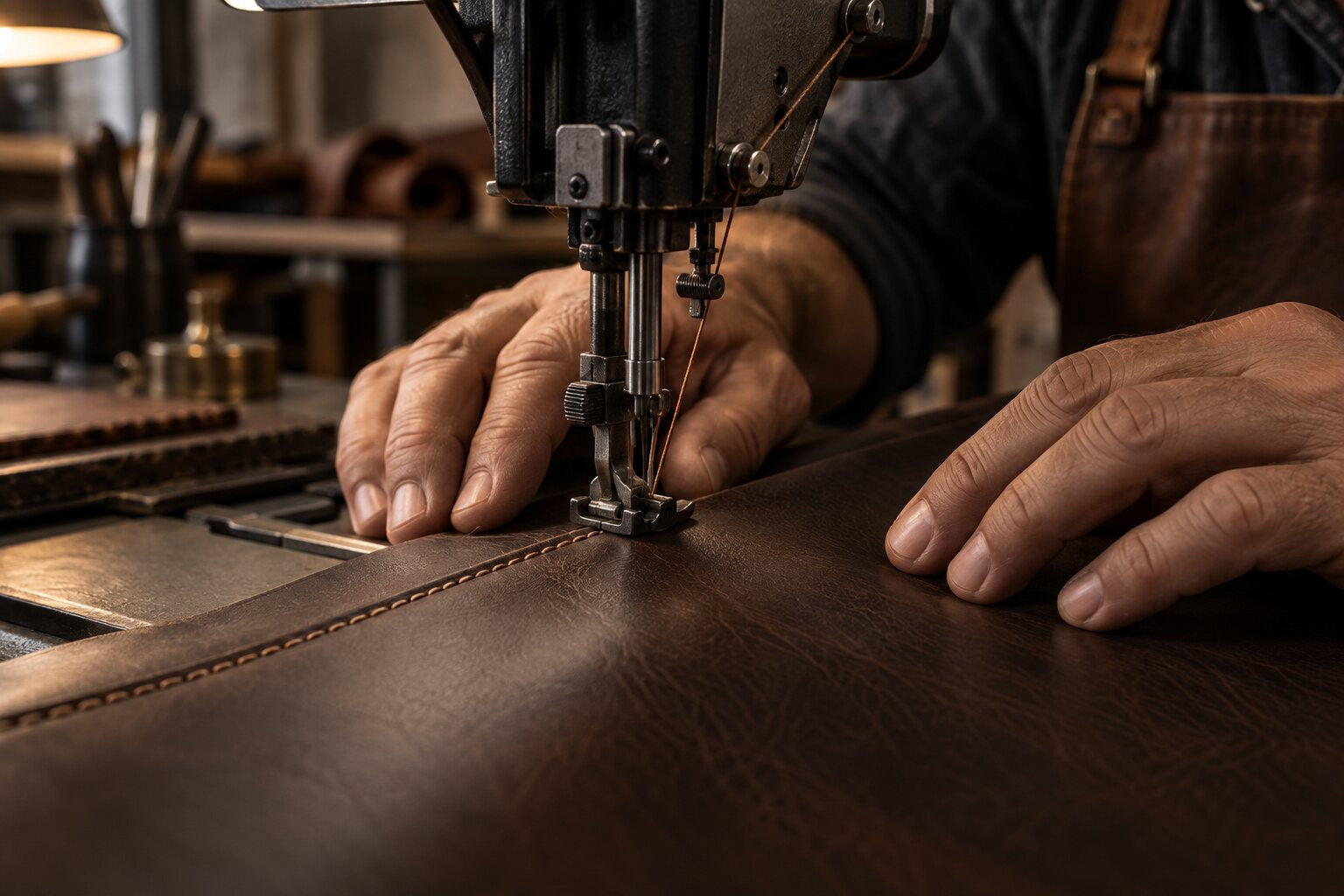
Every jacket is stitched using bonded nylon thread, chosen for its strength and resistance to fraying compared to standard cotton thread over years of wear. Topstitching runs at a consistent 7–9 stitches per inch across our jackets — tight enough to hold seams securely under stress, without over-stitching the leather in a way that weakens the hide along the seam line. This is the same construction standard you'll find applied consistently whether you're looking at a B3 bomber jacket or an aviator jacket — the stitching spec doesn't change based on style.
Quality Control, Twice Over
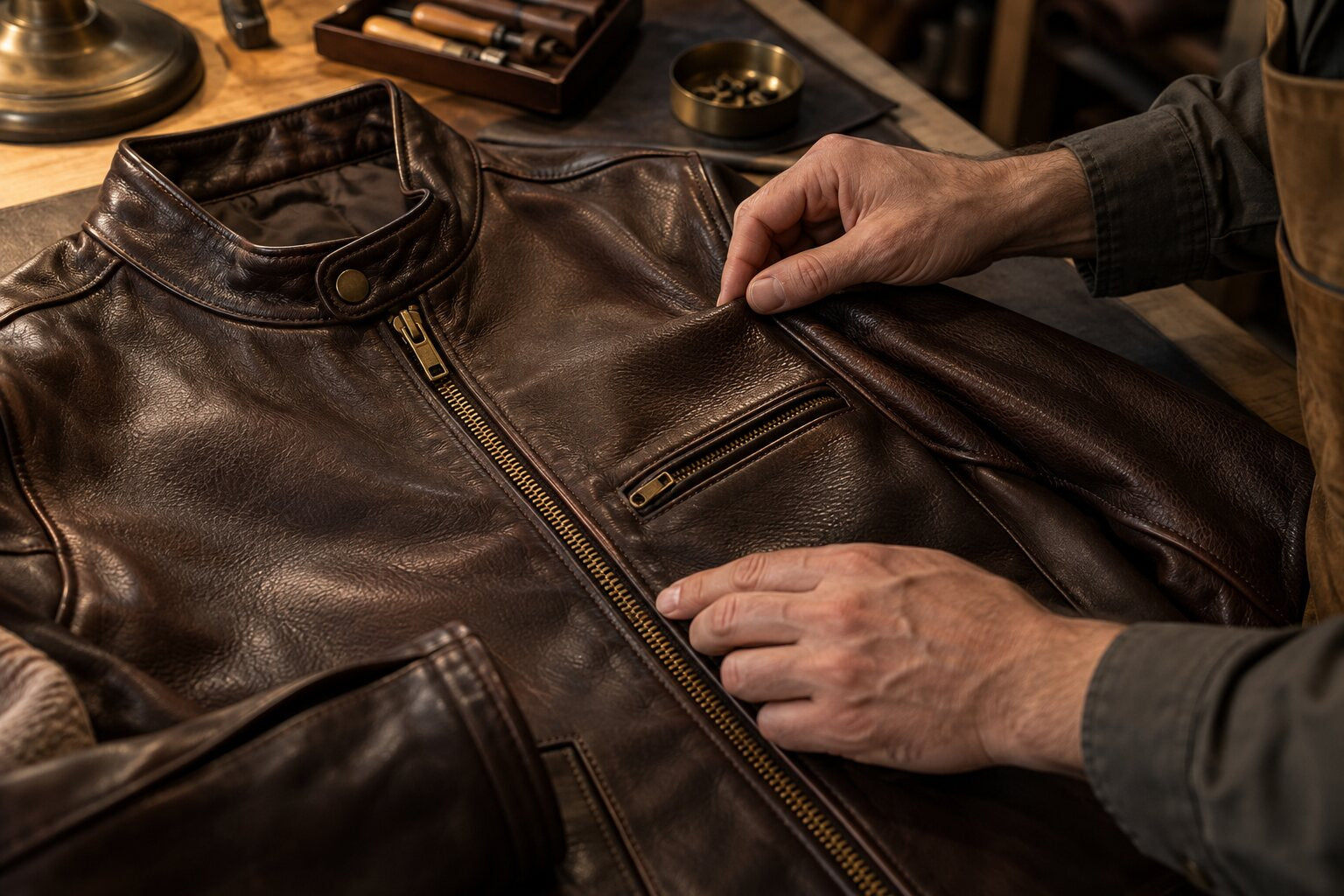
Every jacket is inspected twice before it reaches a customer. The first check happens right after manufacturing, going over the leather grain, stitch lines, and hardware for anything that doesn't meet standard. The second check happens again just before packing — a final pass to catch anything that might have shifted or been missed the first time. Both checks cover the same three things: the leather itself, the stitching, and the hardware, since a flaw in any one of those is enough to compromise the jacket. This two-stage process is why what ships out is meant to match what's described on the product page, not something reduced in quality between order and delivery.
Built With a Purpose, Not Just a Look
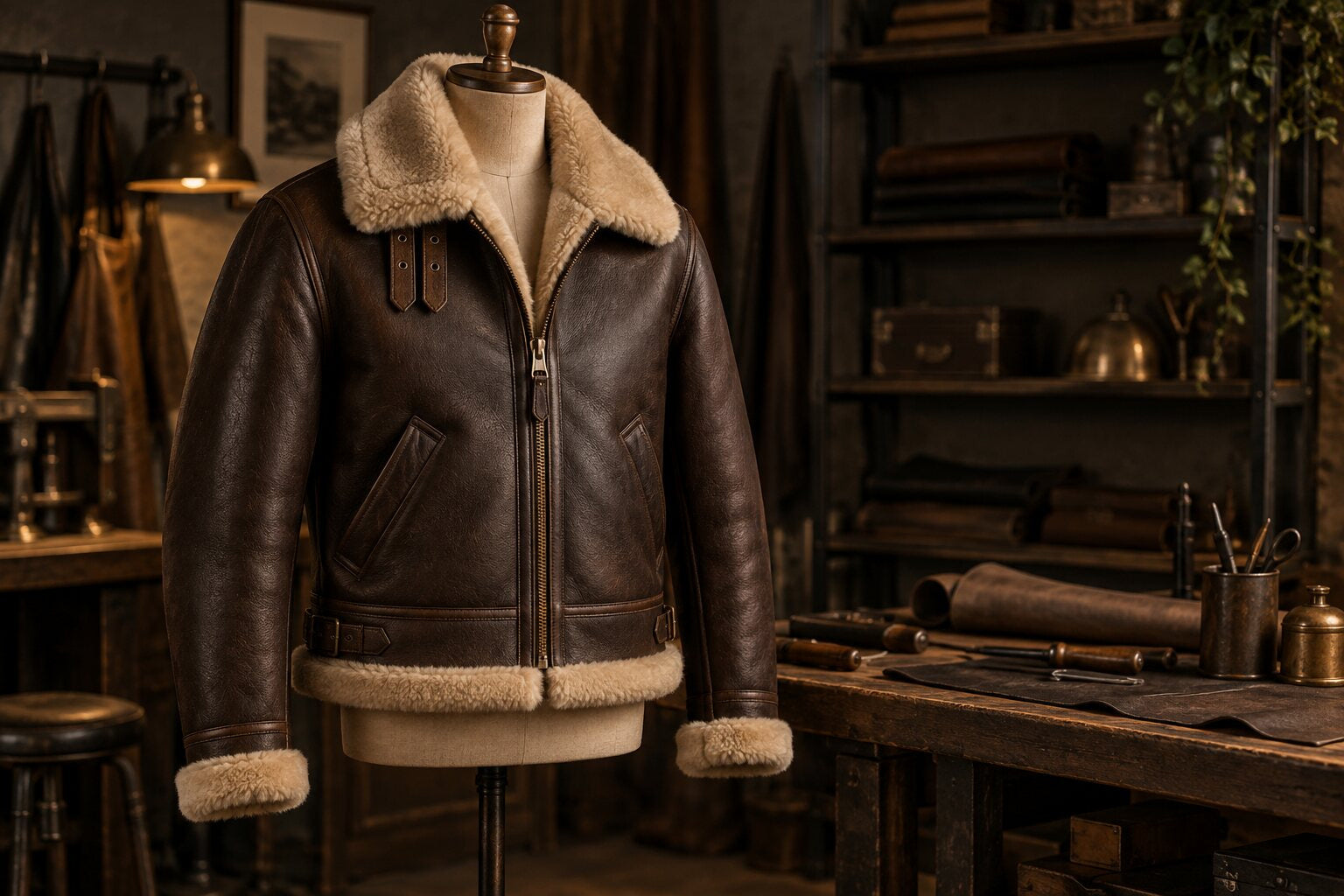
None of this — the tannery sourcing, the tanning method, the stitch density, the double inspection — exists to make the jackets photograph better. It exists so a jacket bought today still holds its shape and stitching years from now. If you're deciding between styles, our Bomber Jackets and Biker Jackets collections are built to the same standard described here, just cut for different silhouettes.
For more on how to tell genuine leather from something dressed up to look like it, our guide on full-grain vs genuine leather breaks down what actually separates the two — worth a read before you buy, wherever you're buying from.
For longer-lasting wear: Keep leather away from direct heat, allow damp leather to dry naturally, and store the jacket on a broad, supportive hanger to help maintain its shape.
FAQ
Where are Sheepskin Leathers jackets made?
The leather is sourced from tanneries in Sialkot, Pakistan, a region with a long-established reputation for leather production. Jackets are manufactured and inspected there before shipping.
What tanning process is used on the leather?
Depending on the jacket, hides are either chrome-tanned for a softer, more supple finish, or vegetable-tanned for a firmer, more structured feel. The method is chosen based on what the specific style calls for.
How is quality checked before a jacket ships?
Every jacket goes through two separate inspections — one immediately after manufacturing and one again just before packing. Both checks examine the leather, stitching, and hardware.
What type of thread is used for the stitching?
Our jackets are stitched with bonded nylon thread, selected for its strength and resistance to fraying during regular wear.
How many stitches per inch are used?
Topstitching is kept at a consistent 7–9 stitches per inch to secure the seams without over-perforating and weakening the leather.